ACE Fiber
ACE Fiber
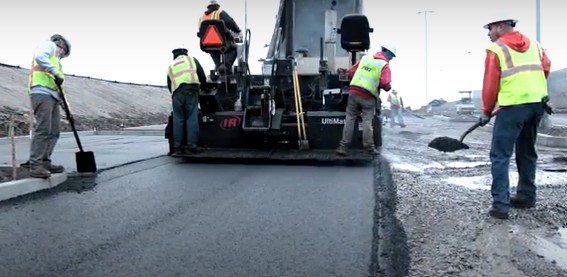
Revolutionary Strength with ACE FIBER Asphalt Additive
ACE FIBER blends aramid fibers and Sasobit wax into asphalt to resist cracking and rutting, extend pavement life, and simplify construction practices.
Pavement durability is won or lost in the mix. Nexterra's ACE FIBER introduces millions of aramid fibers into each ton of asphalt, forming a continuous internal reinforcement matrix that strengthens the pavement structure against fatigue from traffic, heat cycles, and environmental loading. Because the fibers are pre-treated and engineered to disperse evenly, mixing and placement proceed with standard equipment and familiar workflows, delivering enhanced performance without operational disruption.
Reinforced Asphalt Performance
Effective asphalt reinforcement depends on both fiber distribution and mix stability. ACE FIBER integrates seamlessly into conventional hot mix and warm mix systems, creating uniform reinforcement that performs predictably in the field.
- Millions of high-strength aramid fibers interlock within the asphalt matrix, increasing resistance to cracking, reflective fatigue, and long-term surface distress.
- Even fiber dispersion ensures consistent reinforcement throughout the pavement layer, avoiding weak zones or variable performance.
- Built-in Sasobit wax enhances workability, improves compaction, and supports uniform density across changing placement conditions.
- Reduced layer thickness requirements can lower material volumes and placement costs without compromising performance or service life.
- Increased crack resistance and rut resistance extend pavement life cycles and reduce maintenance intervals, improving lifecycle economics.
Together, these performance characteristics deliver a pavement structure that carries load more efficiently and maintains surface integrity through repeated seasonal and traffic cycles.
Proven Results
Field and performance testing across municipal roadways, high-volume corridors, and industrial pavements demonstrates measurable gains in structural longevity. Reinforced asphalt lifts maintain smoother surfaces, show reduced crack formation during thermal cycling, and hold shape under sustained wheel load pressures, even in harsh climates. These results translate directly into fewer repairs, longer resurfacing intervals, and predictable lifecycle cost savings.

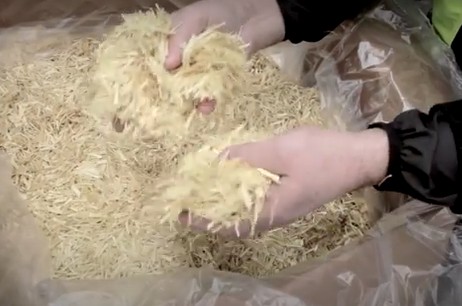
Upstream Mix and Placement Continuity
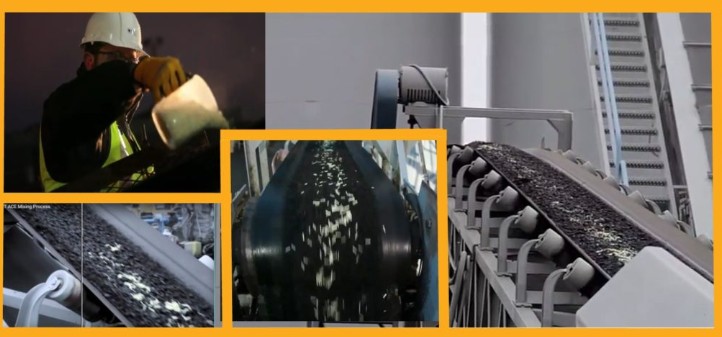
Effective reinforcement begins at the plant, where fiber dosing and distribution must remain stable. ACE FIBER integrates directly into standard batch and drum operations and maintains consistent fiber separation and loading during mixing without specialized feeders or adjustments.
- Pre-treated fibers disperse evenly throughout the asphalt matrix during standard drum or batch cycle mixing, avoiding clumping or localized concentration.
- Integration requires no additional equipment, line modifications, or handling procedures, maintaining normal plant output and jobsite production pace.
- Uniform fiber reinforcement is established before compaction begins, ensuring the pavement lift performs as a cohesive structural layer rather than a surface treatment.
- Consistent placement and rolling practices remain unchanged, allowing crews to maintain productivity while delivering upgraded pavement performance.
This continuity ensures reinforcement is built into the asphalt structure itself, not applied as a surface enhancement, producing predictable strength from the first traffic load forward.
Downstream Pavement Longevity and Performance Stability
Once placed, ACE FIBER reinforced asphalt maintains tensile capacity, controls crack propagation, and resists deformation throughout its service life. This ensures pavement performance remains stable through traffic loading, climate variation, and seasonal thermal cycles.
- Enhanced tensile reinforcement distributes strain energy throughout the asphalt matrix, preventing the stress concentrations that initiate cracking.
- Reinforced structure resists rutting under repeated wheel paths, preserving grade smoothness, drainage slope, and ride quality.
- Thermal cycling stability limits expansion and contraction effects that typically fracture asphalt during freeze thaw transitions.
- Long-term durability reduces the need for overlays and patching, lowering lifecycle cost and minimizing operational disruptions.
The result is a pavement system that remains resilient, predictable, and cost-effective from initial placement through full design service life.
.jpg)
Support Material
Nexterra Environmental partners with leading manufacturers to deliver the industry’s most trusted solutions.