Geosynthetic Clay Liners
Geosynthetic Clay Liners
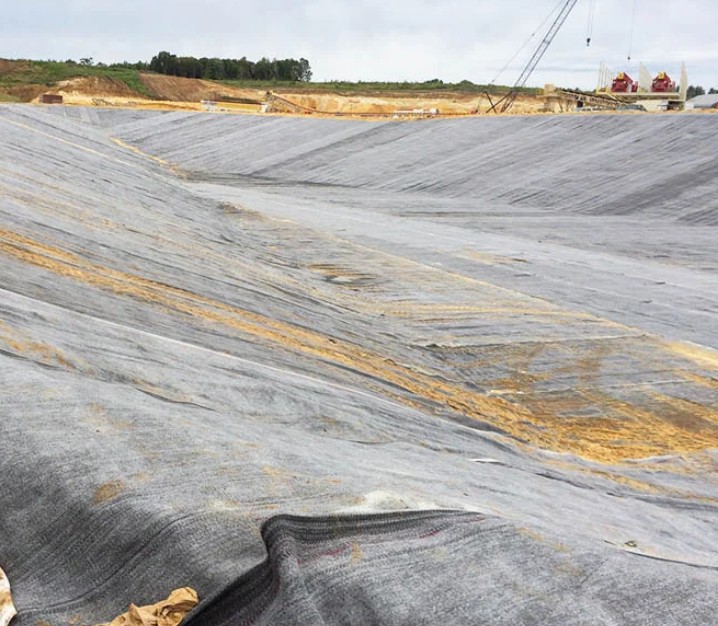
Geosynthetic Clay Liners Deliver Lasting Waterproof Protection
GCLs combine bentonite clay and geotextiles into a reinforced barrier that controls seepage across ponds, landfills, and critical containment applications.
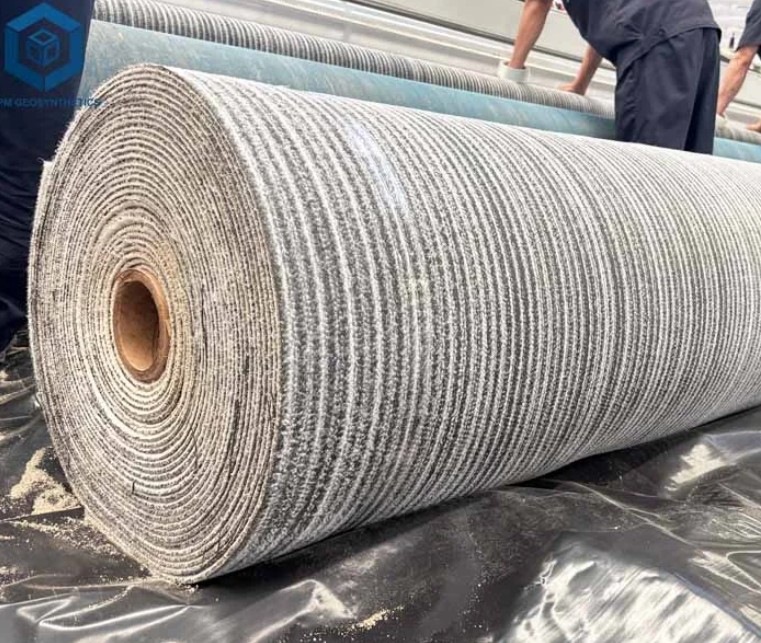
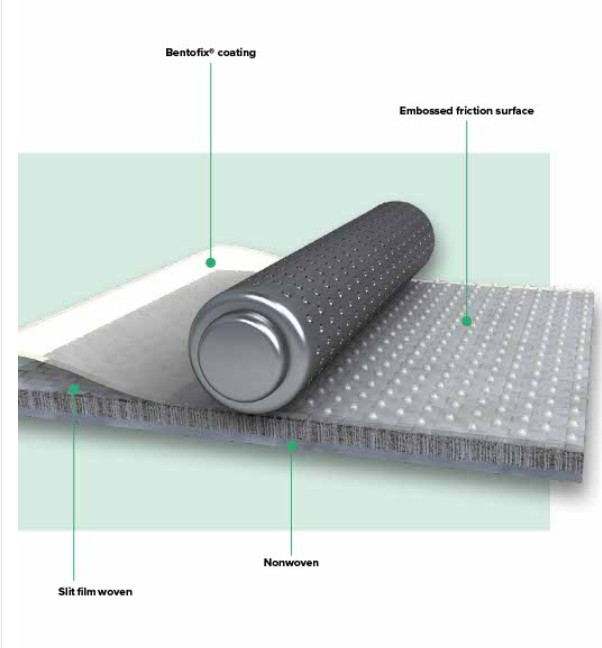
Manufactured by encapsulating natural sodium bentonite between durable geotextile layers, GCLs expand on hydration to form an impermeable layer that rivals several feet of compacted clay. Needle-punched fibers lock the composite structure together, while thermal processing increases internal shear strength and slope stability even under long-term loading.
Reliable protection and streamlined installation position GCLs as a dependable containment solution across diverse project conditions. The following applications represent common use environments where GCL performance has been field-proven.
Application Versatility
GCLs are selected where containment reliability must remain consistent under settlement, slope loading, fluctuating water levels, or long-duration environmental exposure. Their engineered bentonite core activates on hydration to create a continuous low-permeability barrier that performs across a wide range of civil and industrial environments.
- Golf course and landscape ponds maintain dependable water levels and visual consistency while accommodating shifts in seasonal hydrology and soil movement.
- Stormwater and sedimentation basins achieve regulated containment performance with uniform sealing that withstands repeated filling and drawdown cycles.
- Recreational lakes and irrigation canals rely on flexible hydraulic control that conforms to variable subgrades and operational water fluctuations.
- Landfill baseliners and caps deliver environmentally secure isolation by providing controlled seepage prevention across broad surface areas under long-term settlement.
- Dams, dikes, and vertical cutoff walls maintain internal shear stability and impermeability where barrier failure is not acceptable.
- Soil remediation and groundwater protection sites use GCLs to establish controlled separation zones that prevent contaminant migration.
- Transportation corridors and embankment structures prevent subsurface water infiltration that can compromise foundation stability and service life.
- Secondary containment beneath above-ground storage tanks ensures controlled isolation in the event of leaks or system discharge.
Together, these deployments confirm that GCLs consistently deliver low-permeability sealing and stable interface shear performance across diverse containment environments. This reliability allows engineers to specify one liner system with confidence, even where ground conditions, loading, and long-term operational demands vary significantly.
Material Advantages
GCLs deliver hydraulic performance comparable to several feet of compacted clay while requiring far less material handling and installation time. The bentonite core self-seals under puncture and swell pressure, closing micro-voids that would compromise traditional soil liners. Needle-punched reinforcement preserves internal shear strength on steep slopes and during long-term settlement, maintaining barrier continuity where compacted clay and unreinforced systems can crack or separate.
Upstream Subgrade Continuity
Upstream performance depends on tight, continuous contact between the liner and the prepared subgrade, eliminating voids that allow water to travel, undermine slopes, or push material out of place. When the bentonite hydrates evenly, it forms a uniform low-permeability layer that locks into the surface and maintains seal performance through initial filling, settlement, and early load cycles. This creates a containment surface that behaves predictably and stays seated, giving crews confidence that the system will hold from the start of operation forward.


Downstream Long-Term Barrier Performance
Downstream reliability comes from maintaining internal shear strength, resisting weathering, and preventing chemical breakdown over time. With the bentonite fully encapsulated and reinforced, GCLs hold their seal without cracking, drying, or losing permeability, even under long-term loading and operational cycling. This stability keeps containment systems performing consistently through seasonal shifts and process changes, protecting both environmental resources and the efficiency of the overall system.
Support Material
Nexterra Environmental partners with leading manufacturers to deliver the industry’s most trusted solutions.