Case Study
MnDOT I-494 Corridor
High-Performance Slope Stabilization Through Active Traffic and Sensitive Terrain
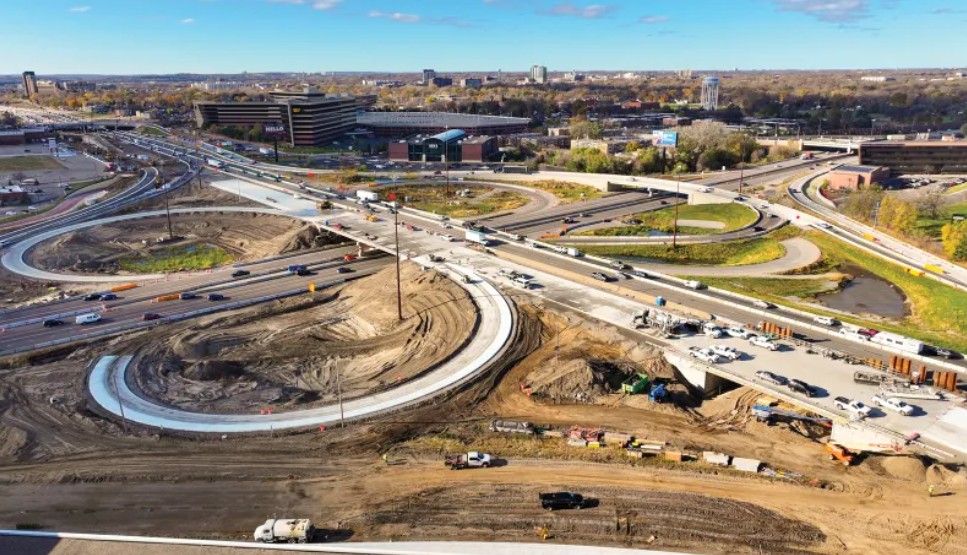
Project Overview
Sports Turf
Turf Establishment
Argonamic Optimization
Brandt/Grigg Liquid Fertilizers
Turf Establishment
TerraMax Tazo Products

Canterbury Park’s one-mile, 14-acre turf track is critical for horse safety and national broadcast presentation. When Kevin Cole stepped into the turf manager role in 2019, he faced the challenge of maintaining a high-performance racing surface without deep turf experience.In addition to the track, another 14 acres required consistent playability, strong root development, and a clean, professional appearance under televised conditions. The need was clear: build a sustainable program backed by trusted expertise.
Nexterra's Approach
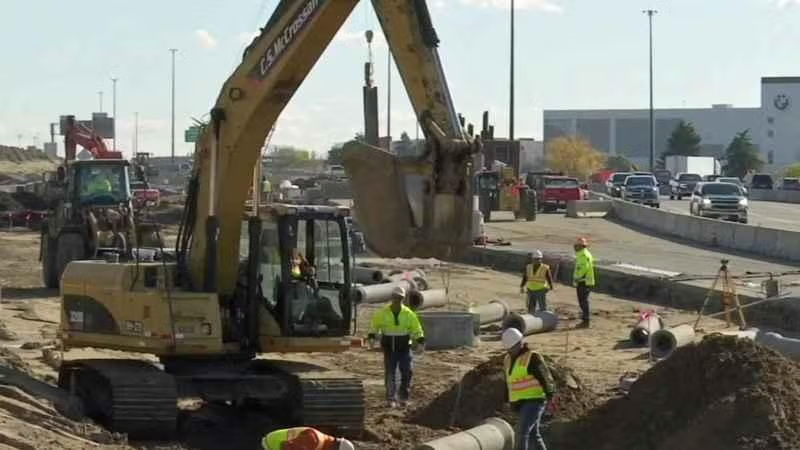
Selecting an Erosion Control Blanket Built for Severity
To address these conditions, the project team contacted Ero-Guard, a Nexterra Company, and selected the Ero-Guard EG-2X-NN erosion control blanket for slope stabilization and turf establishment. Designed for high-stress applications, the blanket combines curled excelsior fibers with double jute netting, creating a dense, interlocked matrix that resists displacement under runoff, wind, and traffic-induced forces. Stitching at tight intervals enhances structural integrity, allowing the blanket to conform closely to the soil surface while maintaining strength across steep grades. Listed under MnDOT Category 25 for turf establishment and slope protection, the EG-2X-NN offered the durability required for long construction durations while remaining fully biodegradable over a twelve-month functional lifespan. This balance of strength and environmental compatibility made it well suited for installation near wetlands and other sensitive areas where long-term performance and clean degradation were equally important.
Installation Under Tight Windows and Constant Exposure
Installation progressed under active freeway conditions, requiring precision and efficiency at every stage. Crews fine-graded slopes to remove protruding rocks and debris, then applied MnDOT-approved seed mixes immediately prior to blanket placement. Rolls were unrolled downslope, with a six-inch anchor trench securing the top edge to prevent undermining from surface runoff. Overlaps of four to six inches ensured continuous coverage, while U-staples were installed in dense patterns, particularly near pavement edges, culverts, and high-exposure zones. Temporary wind barriers were deployed during installation to counteract vehicle-induced gusts, and daily inspections allowed crews to identify and address minor shifts caused by traffic, dust, or weather before they escalated into performance issues.
Outcome
Early summer storms tested the system almost immediately, delivering heavy rainfall across freshly graded slopes. Despite the intensity, EG-2X-NN held firmly in place, preventing rill formation and eliminating sediment movement downslope. No blanket failures were observed, even on the steepest 2:1 sections exposed to freeway runoff and wind.Seed germination occurred within ten to fourteen days, with uniform vegetative cover established by August. The excelsior fiber matrix retained moisture beneath the blanket, creating a favorable microenvironment for root development while protecting young vegetation from erosion and desiccation. As fall rains arrived, slopes remained stable and fully vegetated, allowing the project to close out the season with regulatory compliance intact and no corrective work required.
Contractor Experience and Field Observations
Crews noted that the double-netted configuration provided a level of soil grip that standard Type 2 blankets could not match, particularly on steep slopes adjacent to live traffic. Roll dimensions accommodated tight staging areas, allowing efficient handling without disrupting nearby operations. The system supported rapid seed bonding while minimizing risk to adjacent wetlands, helping the project maintain environmental compliance without delays, fines, or additional inspections.Field teams identified best practices that further optimized performance, including increased staple density near pavement edges where vehicle-induced wind was strongest and coordinating seeding immediately ahead of blanket placement to avoid surface crusting. While channelized flow areas may require turf reinforcement mats on future phases, the EG-2X-NN blanket proved more than capable of managing sheet flow and slope runoff typical of freeway embankments.
Proven Results for Highway Applications
Across an entire construction season marked by heavy traffic, summer storms, and variable soil conditions, Ero-Guard EG-2X-NN delivered consistent, reliable erosion control along the I-494 corridor. Slopes remained intact, vegetation established rapidly, and regulatory requirements were met without interruption to construction schedules.